Cash flow statement
The Cash Flow Statement explains how your cash position changed over a period: it starts from your profit, adjusts for money that is earned-but-not-yet-received (or owed-but-not-yet-paid), and reconciles your opening cash to your closing cash. Profit and cash are not the same thing — this report shows the difference.
Before you begin
- Sign in and select your organisation. The report is available on every plan.
- Figures are shown in your functional currency. Positive figures are cash in; negative figures are cash out.
- "Cash and equivalents" means your bank, cash and credit-card accounts (a credit-card balance appears as negative cash).
Open the report
- Go to Reports and, under Financial, open Cash Flow.
- Choose a period with the Reporting Period selector — a preset such as This quarter, or a custom From/To range.
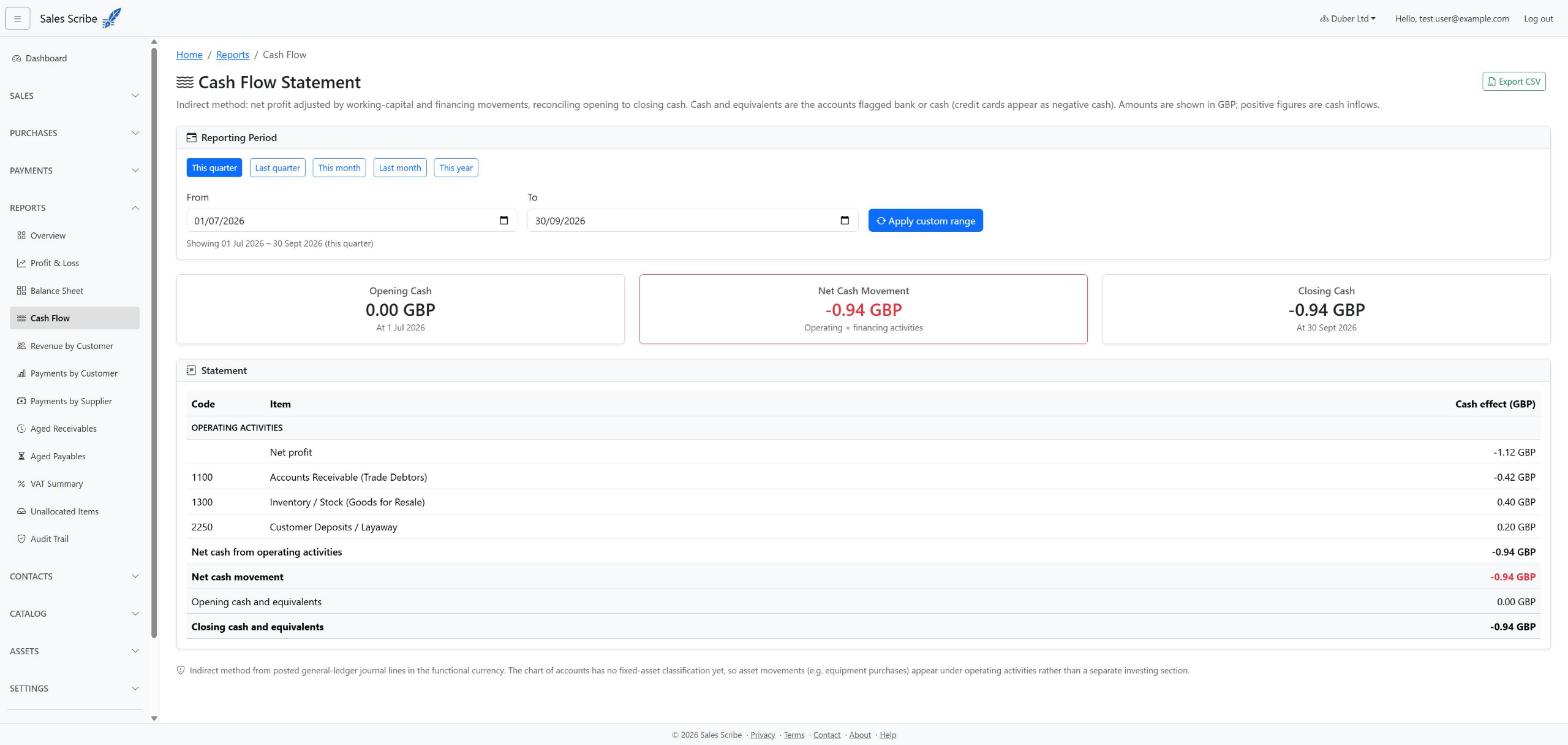
How to read it
Three summary cards give the headline story:
- Opening Cash — your cash and equivalents at the start of the period. If the period starts before your records on Sales Scribe begin, it is your cash when they begin, captioned At 31 Mar 2026, when records begin, and the movements run from the day after. The cash in your opening position is then opening cash, not a cash inflow. See Reports for dates before your opening position.
- Net Cash Movement — how much your cash went up (green) or down (red) during the period.
- Closing Cash — your cash and equivalents at the end of the period. Opening cash plus the movement always equals closing cash.
The Statement below uses the indirect method, the standard way accountants present cash flow:
- Operating activities starts with your Net profit for the period, then adjusts it for changes in working capital — each non-cash asset and liability account that moved is listed with its cash effect. For example, if customers owe you £2,000 more than at the start of the period, that appears as −£2,000: you earned it, but you have not banked it yet. If you owe suppliers more, that appears as a positive figure — costs you have recognised but not yet paid out.
- Financing activities shows movements on equity accounts, such as owner capital paid in.
- Net cash movement, Opening and Closing cash and equivalents finish the reconciliation.
Note: Sales Scribe's chart of accounts does not yet distinguish fixed assets, so there is no separate investing activities section — an equipment purchase appears among the operating movements.
Where the figures come from
Everything derives from your posted general-ledger journals: net profit from the income and expense accounts, the movements from each balance-sheet account's change over the period, and the cash figures from your bank/cash-flagged accounts. Because every posted journal balances, the derived movement must equal the actual change on your cash accounts — if it ever did not, the report shows a prominent red warning; contact support if you see it.
Export
Use the CSV button to download the statement with each section, line and total.